Layer 2 Scaling
How Rollups Work
A rollup processes many transactions off the base chain, then posts compressed results or data back to Layer 1. That lets users pay less for execution while still leaning on the base chain for settlement and verification. It helps readers connect the rollup flow and why batching lowers cost while keeping the core tradeoffs and risks in view. The base layer does not execute every step in the same way the rollup does, but it still acts as the final anchor.
TL;DR
See how rollups batch activity, why they post data back to Layer 1, and how that design changes cost without fully leaving the base chain. It clarifies the rollup flow, why batching lowers cost, and what still gets posted back so the lesson fits into the bigger layer 2 scaling picture.
The rollup flow
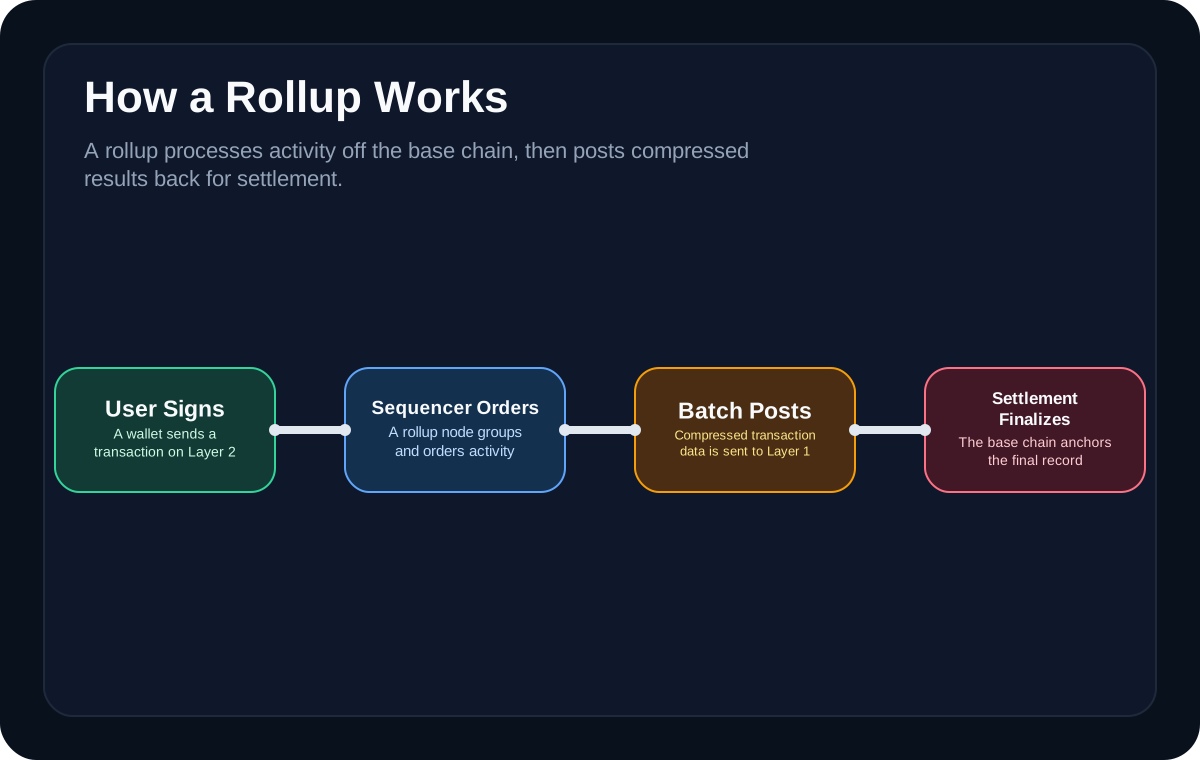
A user signs a transaction on Layer 2, a sequencer or related operator orders that activity, and then batches of transaction data or proofs get sent back to the base chain. The base layer does not execute every step in the same way the rollup does, but it still acts as the final anchor. In simple terms: the rollup does more of the fast work, and Layer 1 keeps the long-term record honest.
**How Rollups Work** becomes easier to understand when you translate it into a user flow instead of a definition. In practice, learners usually meet this idea while *bridging assets from Ethereum onto a rollup*, then discover that the visible app action sits on top of wallet permissions, network rules, liquidity, or settlement assumptions that are easy to miss the first time. That is why the safest beginner habit is to ask how the action works, what the hidden dependency is, and what part of the system would fail first under stress.
A common beginner mistake here is *using the wrong bridge route or unsupported network*. Another is *focusing on headline fees without understanding exit friction*. Those errors usually do not come from bad intent; they come from skipping one layer of understanding and moving straight to the transaction. What can go wrong depends on the lesson, but the pattern is consistent: users either trust the wrong tool, underestimate timing and fees, or assume one network's rules apply everywhere. Slowing down long enough to verify the route, asset, counterparty, or contract address prevents a surprising share of early losses.
A useful way to test whether this idea is landing is to picture where it shows up in a real workflow. Someone might run into it while *bridging assets from Ethereum onto a rollup* or *using a lower-cost network for swaps or payments that would feel too expensive on Layer 1*, which is why the topic matters most once money, permissions, or liquidity are already in motion instead of while reading definitions in the abstract.
**Why this matters:** How Rollups Work is more useful when you can connect it to What Are Layer 2s?, Layer 2 Scaling, and How Blockchains Work. That broader map helps beginners judge when the tool fits, when a simpler path is safer, and which follow-on topic to study next before committing real money or signing real transactions.
For primary-source context, see [Optimism rollup overview](https://docs.optimism.io/concepts/architecture/rollups/overview), [Arbitrum Nitro whitepaper](https://docs.arbitrum.io/nitro-whitepaper.pdf), and [Arbitrum rollup overview](https://arbitrum.io/rollup).
Visual Guides
Why batching lowers cost
Batching lowers cost because many user actions can share one Layer 1 posting event instead of each action fighting for main-chain block space on its own. That spreads the expensive part of settlement across more activity. Why this matters: the economics of Layer 2s depend on sharing Layer 1 overhead more efficiently.
The real value of **why batching lowers cost** is that it explains what is happening behind the button a beginner clicks. Whether someone is *using a lower-cost network for swaps or payments that would feel too expensive on Layer 1* or *checking the wallet, app, and return path before moving funds across networks*, the outcome depends on a chain of infrastructure choices such as custody, routing, execution, and final settlement. Once that chain is clear, the topic stops feeling like crypto magic and starts feeling like a system with understandable moving parts.
Most people do not get hurt by the concept itself. They get hurt by the shortcuts they take around it. *Focusing on headline fees without understanding exit friction* can turn a simple workflow into an expensive mistake, and *assuming the fastest user experience comes with no new trust tradeoffs* often becomes visible only after funds are already in motion. That is why good crypto education pairs the mechanics with practical failure modes instead of teaching the upside in isolation.
Beginners usually retain this faster when they attach it to a concrete decision rather than a glossary term. In practice, the concept becomes easier to trust and easier to question once you connect it to a workflow like *using a lower-cost network for swaps or payments that would feel too expensive on Layer 1* and ask what could break, slow down, or become expensive at each step.
**Why this matters:** How Rollups Work is more useful when you can connect it to What Are Layer 2s?, Layer 2 Scaling, and How Blockchains Work. That broader map helps beginners judge when the tool fits, when a simpler path is safer, and which follow-on topic to study next before committing real money or signing real transactions.
What still gets posted back
Different rollups publish different kinds of data or proof structures back to the base chain, but the key idea is the same: the base chain still needs enough information to anchor the rollup’s state and make disputes or verification possible. What this means: rollups are not free-floating apps. Their credibility still comes from a base-chain link.
**How Rollups Work** becomes easier to understand when you translate it into a user flow instead of a definition. In practice, learners usually meet this idea while *checking the wallet, app, and return path before moving funds across networks*, then discover that the visible app action sits on top of wallet permissions, network rules, liquidity, or settlement assumptions that are easy to miss the first time. That is why the safest beginner habit is to ask how the action works, what the hidden dependency is, and what part of the system would fail first under stress.
Most people do not get hurt by the concept itself. They get hurt by the shortcuts they take around it. *Assuming the fastest user experience comes with no new trust tradeoffs* can turn a simple workflow into an expensive mistake, and *using the wrong bridge route or unsupported network* often becomes visible only after funds are already in motion. That is why good crypto education pairs the mechanics with practical failure modes instead of teaching the upside in isolation.
A useful way to test whether this idea is landing is to picture where it shows up in a real workflow. Someone might run into it while *checking the wallet, app, and return path before moving funds across networks* or *bridging assets from Ethereum onto a rollup*, which is why the topic matters most once money, permissions, or liquidity are already in motion instead of while reading definitions in the abstract.
**Why this matters:** How Rollups Work is more useful when you can connect it to What Are Layer 2s?, Layer 2 Scaling, and How Blockchains Work. That broader map helps beginners judge when the tool fits, when a simpler path is safer, and which follow-on topic to study next before committing real money or signing real transactions.
Why rollups became so important
Rollups became important because they offered a path to scale major ecosystems like Ethereum without abandoning the value of the underlying chain. They let developers build apps for more users without asking every action to settle expensively on Layer 1 first. Why this matters: much of modern crypto product growth depends on rollup economics making application use practical.
The real value of **why rollups became so important** is that it explains what is happening behind the button a beginner clicks. Whether someone is *bridging assets from Ethereum onto a rollup* or *using a lower-cost network for swaps or payments that would feel too expensive on Layer 1*, the outcome depends on a chain of infrastructure choices such as custody, routing, execution, and final settlement. Once that chain is clear, the topic stops feeling like crypto magic and starts feeling like a system with understandable moving parts.
A common beginner mistake here is *using the wrong bridge route or unsupported network*. Another is *focusing on headline fees without understanding exit friction*. Those errors usually do not come from bad intent; they come from skipping one layer of understanding and moving straight to the transaction. What can go wrong depends on the lesson, but the pattern is consistent: users either trust the wrong tool, underestimate timing and fees, or assume one network's rules apply everywhere. Slowing down long enough to verify the route, asset, counterparty, or contract address prevents a surprising share of early losses.
Beginners usually retain this faster when they attach it to a concrete decision rather than a glossary term. In practice, the concept becomes easier to trust and easier to question once you connect it to a workflow like *bridging assets from Ethereum onto a rollup* and ask what could break, slow down, or become expensive at each step.
**Why this matters:** How Rollups Work is more useful when you can connect it to What Are Layer 2s?, Layer 2 Scaling, and How Blockchains Work. That broader map helps beginners judge when the tool fits, when a simpler path is safer, and which follow-on topic to study next before committing real money or signing real transactions.
What users should actually remember
Most users do not need to memorize every proof system to understand rollups. The important thing is to know that Layer 2 activity is faster and cheaper because execution is offloaded, but safety still depends on how the rollup connects back to the base chain. In simple terms: cheaper fees come from changed architecture, not magic.
**How Rollups Work** becomes easier to understand when you translate it into a user flow instead of a definition. In practice, learners usually meet this idea while *using a lower-cost network for swaps or payments that would feel too expensive on Layer 1*, then discover that the visible app action sits on top of wallet permissions, network rules, liquidity, or settlement assumptions that are easy to miss the first time. That is why the safest beginner habit is to ask how the action works, what the hidden dependency is, and what part of the system would fail first under stress.
Most people do not get hurt by the concept itself. They get hurt by the shortcuts they take around it. *Focusing on headline fees without understanding exit friction* can turn a simple workflow into an expensive mistake, and *assuming the fastest user experience comes with no new trust tradeoffs* often becomes visible only after funds are already in motion. That is why good crypto education pairs the mechanics with practical failure modes instead of teaching the upside in isolation.
A useful way to test whether this idea is landing is to picture where it shows up in a real workflow. Someone might run into it while *using a lower-cost network for swaps or payments that would feel too expensive on Layer 1* or *checking the wallet, app, and return path before moving funds across networks*, which is why the topic matters most once money, permissions, or liquidity are already in motion instead of while reading definitions in the abstract.
**Why this matters:** How Rollups Work is more useful when you can connect it to What Are Layer 2s?, Layer 2 Scaling, and How Blockchains Work. That broader map helps beginners judge when the tool fits, when a simpler path is safer, and which follow-on topic to study next before committing real money or signing real transactions.
Glossary
- Rollup
- A Layer 2 design that batches activity and posts results or data back to a base chain.
- Sequencer
- A component that orders Layer 2 transactions before they are batched.
- Batch
- A grouped set of transactions processed together.
- Proof
- Evidence used to support or verify a state transition or claim.
FAQ
What is the easiest way to explain a rollup?
A rollup is a scaling network that batches many transactions off the base chain and then reports the important results back. It is a way to share Layer 1 costs across many users instead of making each one pay the full amount alone.
Why are rollups cheaper than Layer 1 transactions?
Because they spread the expensive part of settlement across many actions instead of asking the base chain to process each one individually in the same way. That reduces the per-user cost when the system is working well.
Does using a rollup mean Layer 1 no longer matters?
No. The base chain still matters for settlement, posted data, or dispute resolution depending on the rollup design. The whole point is that the rollup gains value from that relationship.
Are all rollups the same?
No. They can differ in how they order transactions, publish data, handle proofs, and manage withdrawals or upgrades. The broad concept is similar, but the trust assumptions can still vary a lot.
Why do rollups matter for app adoption?
Because they can make crypto apps usable for more people by lowering fees and improving speed. That gives developers more room to build products that feel less punishing to use.