Layer 2 Scaling
Using Layer 2s Well
Using Layer 2s well means matching the network and route to the task you actually need to do. The best choice is usually the one your wallet, app, and bridge path all support cleanly with the least unnecessary complexity. It helps readers connect start with the job, not the brand and match the wallet, app, and route while keeping the core tradeoffs and risks in view. A user who wants cheaper swaps, a user who wants a gaming app, and a user who wants to bridge stablecoins may not need the same Layer 2.
TL;DR
Bring it together with a practical checklist for picking the right Layer 2, using the right bridge route, and avoiding the mistakes that confuse first-time users. It clarifies start with the job, not the brand, match the wallet, app, and route, and keep small test transactions normal so the lesson fits into the bigger layer 2 scaling picture.
Start with the job, not the brand
A user who wants cheaper swaps, a user who wants a gaming app, and a user who wants to bridge stablecoins may not need the same Layer 2. The best first question is what you are trying to do, not which network is currently the loudest. In simple terms: choose the Layer 2 around the use case, not the hype cycle.
**Using Layer 2s Well** becomes easier to understand when you translate it into a user flow instead of a definition. In practice, learners usually meet this idea while *bridging assets from Ethereum onto a rollup*, then discover that the visible app action sits on top of wallet permissions, network rules, liquidity, or settlement assumptions that are easy to miss the first time. That is why the safest beginner habit is to ask how the action works, what the hidden dependency is, and what part of the system would fail first under stress.
A common beginner mistake here is *using the wrong bridge route or unsupported network*. Another is *focusing on headline fees without understanding exit friction*. Those errors usually do not come from bad intent; they come from skipping one layer of understanding and moving straight to the transaction. What can go wrong depends on the lesson, but the pattern is consistent: users either trust the wrong tool, underestimate timing and fees, or assume one network's rules apply everywhere. Slowing down long enough to verify the route, asset, counterparty, or contract address prevents a surprising share of early losses.
A useful way to test whether this idea is landing is to picture where it shows up in a real workflow. Someone might run into it while *bridging assets from Ethereum onto a rollup* or *using a lower-cost network for swaps or payments that would feel too expensive on Layer 1*, which is why the topic matters most once money, permissions, or liquidity are already in motion instead of while reading definitions in the abstract.
**Why this matters:** Using Layer 2s Well is more useful when you can connect it to What Are Layer 2s?, Crypto Wallets, and Crypto Security. That broader map helps beginners judge when the tool fits, when a simpler path is safer, and which follow-on topic to study next before committing real money or signing real transactions.
For primary-source context, see [Ethereum wallets guide](https://ethereum.org/en/wallets), [Ethereum security report](https://ethereum.org/reports/trillion-dollar-security.pdf), and [Optimism OP Stack explainer](https://docs.optimism.io/stack/explainer).
Match the wallet, app, and route
A smooth Layer 2 experience usually comes from having the right wallet support, a trusted bridge path, and an app that actually runs on the chain you picked. Many beginner mistakes happen when one of those pieces does not match the others. Why this matters: Layer 2 usability is mostly about compatibility and routing discipline.
The real value of **match the wallet, app, and route** is that it explains what is happening behind the button a beginner clicks. Whether someone is *using a lower-cost network for swaps or payments that would feel too expensive on Layer 1* or *checking the wallet, app, and return path before moving funds across networks*, the outcome depends on a chain of infrastructure choices such as custody, routing, execution, and final settlement. Once that chain is clear, the topic stops feeling like crypto magic and starts feeling like a system with understandable moving parts.
Most people do not get hurt by the concept itself. They get hurt by the shortcuts they take around it. *Focusing on headline fees without understanding exit friction* can turn a simple workflow into an expensive mistake, and *assuming the fastest user experience comes with no new trust tradeoffs* often becomes visible only after funds are already in motion. That is why good crypto education pairs the mechanics with practical failure modes instead of teaching the upside in isolation.
Beginners usually retain this faster when they attach it to a concrete decision rather than a glossary term. In practice, the concept becomes easier to trust and easier to question once you connect it to a workflow like *using a lower-cost network for swaps or payments that would feel too expensive on Layer 1* and ask what could break, slow down, or become expensive at each step.
**Why this matters:** Using Layer 2s Well is more useful when you can connect it to What Are Layer 2s?, Crypto Wallets, and Crypto Security. That broader map helps beginners judge when the tool fits, when a simpler path is safer, and which follow-on topic to study next before committing real money or signing real transactions.
Keep small test transactions normal
Using a small test transfer first is not paranoia. It is a normal way to verify you picked the right chain, asset, and route before moving more value. What this means: careful users treat verification as part of the workflow, not as an optional extra.
**Using Layer 2s Well** becomes easier to understand when you translate it into a user flow instead of a definition. In practice, learners usually meet this idea while *checking the wallet, app, and return path before moving funds across networks*, then discover that the visible app action sits on top of wallet permissions, network rules, liquidity, or settlement assumptions that are easy to miss the first time. That is why the safest beginner habit is to ask how the action works, what the hidden dependency is, and what part of the system would fail first under stress.
Most people do not get hurt by the concept itself. They get hurt by the shortcuts they take around it. *Assuming the fastest user experience comes with no new trust tradeoffs* can turn a simple workflow into an expensive mistake, and *using the wrong bridge route or unsupported network* often becomes visible only after funds are already in motion. That is why good crypto education pairs the mechanics with practical failure modes instead of teaching the upside in isolation.
A useful way to test whether this idea is landing is to picture where it shows up in a real workflow. Someone might run into it while *checking the wallet, app, and return path before moving funds across networks* or *bridging assets from Ethereum onto a rollup*, which is why the topic matters most once money, permissions, or liquidity are already in motion instead of while reading definitions in the abstract.
**Why this matters:** Using Layer 2s Well is more useful when you can connect it to What Are Layer 2s?, Crypto Wallets, and Crypto Security. That broader map helps beginners judge when the tool fits, when a simpler path is safer, and which follow-on topic to study next before committing real money or signing real transactions.
Know the return path
Before moving funds onto a Layer 2, know how you would get them off again if needed. That means understanding withdrawal timing, bridge options, and any costs tied to coming back to Layer 1 or another chain. Why this matters: the return path feels boring until you need it quickly.
The real value of **know the return path** is that it explains what is happening behind the button a beginner clicks. Whether someone is *bridging assets from Ethereum onto a rollup* or *using a lower-cost network for swaps or payments that would feel too expensive on Layer 1*, the outcome depends on a chain of infrastructure choices such as custody, routing, execution, and final settlement. Once that chain is clear, the topic stops feeling like crypto magic and starts feeling like a system with understandable moving parts.
A common beginner mistake here is *using the wrong bridge route or unsupported network*. Another is *focusing on headline fees without understanding exit friction*. Those errors usually do not come from bad intent; they come from skipping one layer of understanding and moving straight to the transaction. What can go wrong depends on the lesson, but the pattern is consistent: users either trust the wrong tool, underestimate timing and fees, or assume one network's rules apply everywhere. Slowing down long enough to verify the route, asset, counterparty, or contract address prevents a surprising share of early losses.
Beginners usually retain this faster when they attach it to a concrete decision rather than a glossary term. In practice, the concept becomes easier to trust and easier to question once you connect it to a workflow like *bridging assets from Ethereum onto a rollup* and ask what could break, slow down, or become expensive at each step.
**Why this matters:** Using Layer 2s Well is more useful when you can connect it to What Are Layer 2s?, Crypto Wallets, and Crypto Security. That broader map helps beginners judge when the tool fits, when a simpler path is safer, and which follow-on topic to study next before committing real money or signing real transactions.
The best beginner checklist
Good Layer 2 habits are mostly about verification and route awareness. In simple terms: the safest experience comes from choosing the simplest compatible setup and checking every step before you commit.
**Using Layer 2s Well** becomes easier to understand when you translate it into a user flow instead of a definition. In practice, learners usually meet this idea while *using a lower-cost network for swaps or payments that would feel too expensive on Layer 1*, then discover that the visible app action sits on top of wallet permissions, network rules, liquidity, or settlement assumptions that are easy to miss the first time. That is why the safest beginner habit is to ask how the action works, what the hidden dependency is, and what part of the system would fail first under stress.
Most people do not get hurt by the concept itself. They get hurt by the shortcuts they take around it. *Focusing on headline fees without understanding exit friction* can turn a simple workflow into an expensive mistake, and *assuming the fastest user experience comes with no new trust tradeoffs* often becomes visible only after funds are already in motion. That is why good crypto education pairs the mechanics with practical failure modes instead of teaching the upside in isolation.
A useful way to test whether this idea is landing is to picture where it shows up in a real workflow. Someone might run into it while *using a lower-cost network for swaps or payments that would feel too expensive on Layer 1* or *checking the wallet, app, and return path before moving funds across networks*, which is why the topic matters most once money, permissions, or liquidity are already in motion instead of while reading definitions in the abstract.
**Why this matters:** Using Layer 2s Well is more useful when you can connect it to What Are Layer 2s?, Crypto Wallets, and Crypto Security. That broader map helps beginners judge when the tool fits, when a simpler path is safer, and which follow-on topic to study next before committing real money or signing real transactions.
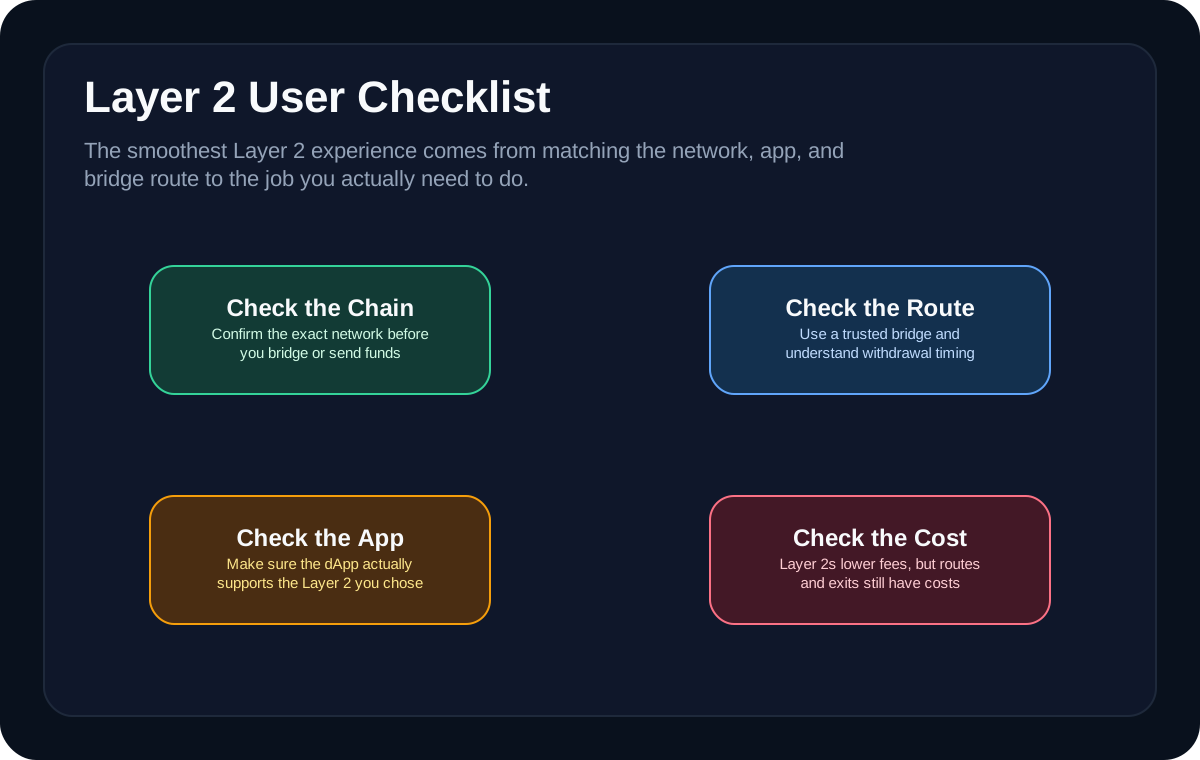
- Confirm the exact network before sending or bridging funds.
- Use a trusted route that matches the wallet and app you plan to use.
- Test with a smaller amount before moving more value.
- Check fee expectations for both the action and the exit path.
- Know how long it can take to withdraw back out if plans change.
Visual Guides
Glossary
- Compatibility
- Whether the wallet, app, bridge, and token all work together on the chosen network.
- Route awareness
- Understanding how value enters, moves through, and exits a network.
- Test transaction
- A small transfer used to verify setup before sending a larger amount.
- On-ramp
- The path used to get assets or funds into a network or ecosystem.
FAQ
What is the first thing to decide before using a Layer 2?
Decide what job you need the network to do. That usually makes the wallet, app, and bridge choice much clearer than starting with brand names alone.
Why are test transactions still a good idea?
Because they confirm the route, network, and token setup before more value is at stake. That habit catches a large share of avoidable user errors.
What should I check before bridging?
Check the supported network, token, wallet, and withdrawal route. Those practical checks matter more than memorizing every technical detail of the protocol.
How do I know which Layer 2 is right for me?
Choose the one that cleanly supports the app and route you actually need with the least extra complexity. The best network is often the one that fits the workflow most directly.
What should I learn after this course?
The best next steps are deeper Ethereum scaling topics, bridge security, app-specific risk, and how Layer 2 adoption fits into the wider future of crypto infrastructure.