Crypto Fundamentals
Crypto Wallets
A crypto wallet is the tool you use to control blockchain assets and approve transactions. Some wallets are controlled by a company for you, while others give you direct control of the keys and the full responsibility that comes with it. It helps readers connect custodial vs non-custodial wallets and private keys and seed phrases while keeping the core tradeoffs and risks in view. custodial is easier, self-custody gives more control.
TL;DR
Compare custodial and self-custody wallets, hot and cold storage, and the habits that keep crypto keys safe. It clarifies custodial vs non-custodial wallets, private keys and seed phrases, and hot vs cold wallets so the lesson fits into the bigger crypto fundamentals picture.
Custodial vs non-custodial wallets
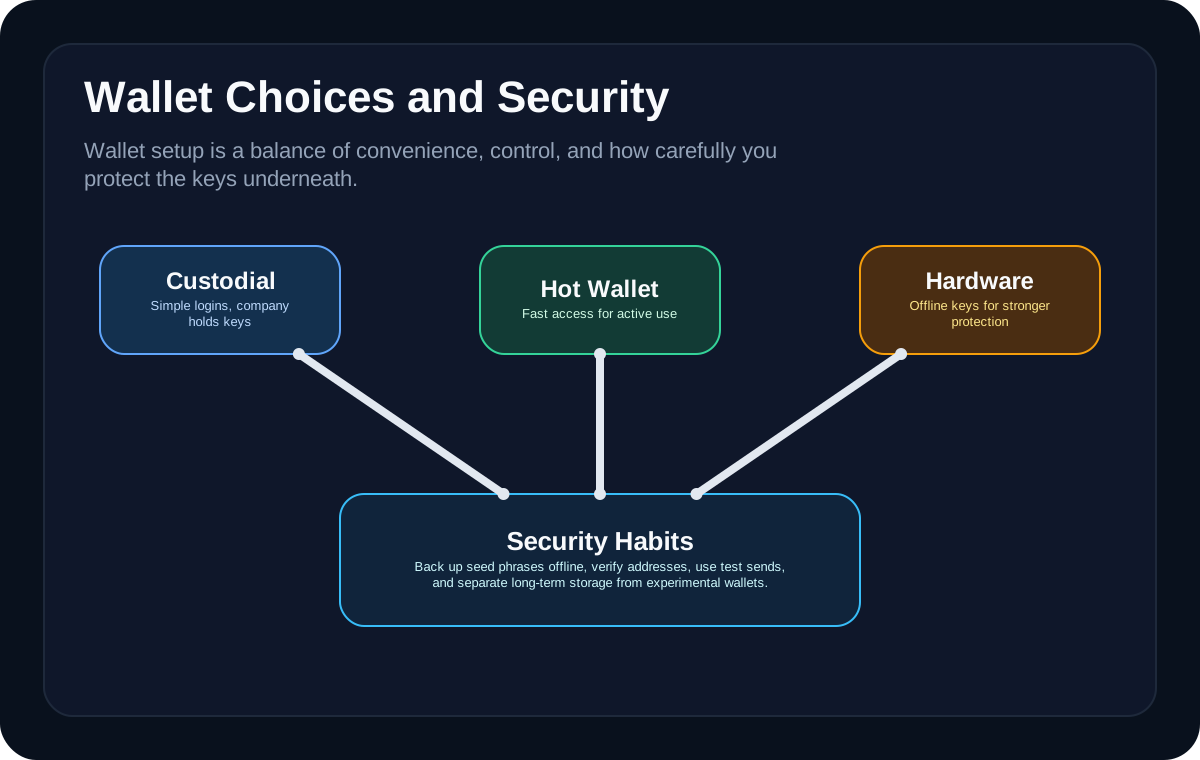
Custodial wallets are managed by a platform such as an exchange, which holds the keys for you and usually lets you log in with familiar account tools. Non-custodial wallets put the keys under your control, which gives you more independence but also more responsibility if something goes wrong. In simple terms: custodial is easier, self-custody gives more control.
**Crypto Wallets** becomes easier to understand when you translate it into a user flow instead of a definition. In practice, learners usually meet this idea while *sending BTC from one self-custody wallet to another*, then discover that the visible app action sits on top of wallet permissions, network rules, liquidity, or settlement assumptions that are easy to miss the first time. That is why the safest beginner habit is to ask how the action works, what the hidden dependency is, and what part of the system would fail first under stress.
A common beginner mistake here is *confusing the wallet interface with the blockchain underneath it*. Another is *sending assets on the wrong network*. Those errors usually do not come from bad intent; they come from skipping one layer of understanding and moving straight to the transaction. What can go wrong depends on the lesson, but the pattern is consistent: users either trust the wrong tool, underestimate timing and fees, or assume one network's rules apply everywhere. Slowing down long enough to verify the route, asset, counterparty, or contract address prevents a surprising share of early losses.
A useful way to test whether this idea is landing is to picture where it shows up in a real workflow. Someone might run into it while *sending BTC from one self-custody wallet to another* or *using ETH to pay for a smart-contract action on Ethereum*, which is why the topic matters most once money, permissions, or liquidity are already in motion instead of while reading definitions in the abstract.
**Why this matters:** Crypto Wallets is more useful when you can connect it to Buying Your First Crypto, Ethereum & Smart Contracts, and Crypto Security. That broader map helps beginners judge when the tool fits, when a simpler path is safer, and which follow-on topic to study next before committing real money or signing real transactions.
For primary-source context, see [Ethereum wallets guide](https://ethereum.org/en/wallets), [Ethereum security report](https://ethereum.org/reports/trillion-dollar-security.pdf), and [Ethereum smart contracts docs](https://ethereum.org/developers/docs/smart-contracts/).
Private keys and seed phrases
A private key is the secret that proves you control a wallet, and a seed phrase is a recovery backup that can regenerate that control. If someone gets either one, they can usually access the funds. Why this matters: wallet security is really key security, not just app security.
The real value of **private keys and seed phrases** is that it explains what is happening behind the button a beginner clicks. Whether someone is *using ETH to pay for a smart-contract action on Ethereum* or *holding stablecoins in a wallet before moving into an exchange or DeFi app*, the outcome depends on a chain of infrastructure choices such as custody, routing, execution, and final settlement. Once that chain is clear, the topic stops feeling like crypto magic and starts feeling like a system with understandable moving parts.
Most people do not get hurt by the concept itself. They get hurt by the shortcuts they take around it. *Sending assets on the wrong network* can turn a simple workflow into an expensive mistake, and *chasing price action before understanding custody, gas fees, and confirmations* often becomes visible only after funds are already in motion. That is why good crypto education pairs the mechanics with practical failure modes instead of teaching the upside in isolation.
Beginners usually retain this faster when they attach it to a concrete decision rather than a glossary term. In practice, the concept becomes easier to trust and easier to question once you connect it to a workflow like *using ETH to pay for a smart-contract action on Ethereum* and ask what could break, slow down, or become expensive at each step.
**Why this matters:** Crypto Wallets is more useful when you can connect it to Buying Your First Crypto, Ethereum & Smart Contracts, and Crypto Security. That broader map helps beginners judge when the tool fits, when a simpler path is safer, and which follow-on topic to study next before committing real money or signing real transactions.
Hot vs cold wallets
Hot wallets stay connected to the internet and are easier to use for daily transactions, while cold wallets keep keys offline and reduce exposure to online attacks. Many people use both: a hot wallet for active use and a hardware wallet for larger balances. What this means: convenience and security usually sit on opposite ends of the same tradeoff.
**Crypto Wallets** becomes easier to understand when you translate it into a user flow instead of a definition. In practice, learners usually meet this idea while *holding stablecoins in a wallet before moving into an exchange or DeFi app*, then discover that the visible app action sits on top of wallet permissions, network rules, liquidity, or settlement assumptions that are easy to miss the first time. That is why the safest beginner habit is to ask how the action works, what the hidden dependency is, and what part of the system would fail first under stress.
Most people do not get hurt by the concept itself. They get hurt by the shortcuts they take around it. *Chasing price action before understanding custody, gas fees, and confirmations* can turn a simple workflow into an expensive mistake, and *confusing the wallet interface with the blockchain underneath it* often becomes visible only after funds are already in motion. That is why good crypto education pairs the mechanics with practical failure modes instead of teaching the upside in isolation.
A useful way to test whether this idea is landing is to picture where it shows up in a real workflow. Someone might run into it while *holding stablecoins in a wallet before moving into an exchange or DeFi app* or *sending BTC from one self-custody wallet to another*, which is why the topic matters most once money, permissions, or liquidity are already in motion instead of while reading definitions in the abstract.
**Why this matters:** Crypto Wallets is more useful when you can connect it to Buying Your First Crypto, Ethereum & Smart Contracts, and Crypto Security. That broader map helps beginners judge when the tool fits, when a simpler path is safer, and which follow-on topic to study next before committing real money or signing real transactions.
How wallets connect to crypto apps
Wallets do more than show balances. They also let you connect to exchanges, DeFi apps, NFT marketplaces, and governance tools by signing transactions or messages. In simple terms: the wallet is both your key manager and your login layer for many crypto products.
The real value of **how wallets connect to crypto apps** is that it explains what is happening behind the button a beginner clicks. Whether someone is *sending BTC from one self-custody wallet to another* or *using ETH to pay for a smart-contract action on Ethereum*, the outcome depends on a chain of infrastructure choices such as custody, routing, execution, and final settlement. Once that chain is clear, the topic stops feeling like crypto magic and starts feeling like a system with understandable moving parts.
A common beginner mistake here is *confusing the wallet interface with the blockchain underneath it*. Another is *sending assets on the wrong network*. Those errors usually do not come from bad intent; they come from skipping one layer of understanding and moving straight to the transaction. What can go wrong depends on the lesson, but the pattern is consistent: users either trust the wrong tool, underestimate timing and fees, or assume one network's rules apply everywhere. Slowing down long enough to verify the route, asset, counterparty, or contract address prevents a surprising share of early losses.
Beginners usually retain this faster when they attach it to a concrete decision rather than a glossary term. In practice, the concept becomes easier to trust and easier to question once you connect it to a workflow like *sending BTC from one self-custody wallet to another* and ask what could break, slow down, or become expensive at each step.
**Why this matters:** Crypto Wallets is more useful when you can connect it to Buying Your First Crypto, Ethereum & Smart Contracts, and Crypto Security. That broader map helps beginners judge when the tool fits, when a simpler path is safer, and which follow-on topic to study next before committing real money or signing real transactions.
Common wallet choices for beginners
Browser and mobile wallets are common entry points for Ethereum-style ecosystems, while hardware wallets are often used for long-term storage. The right setup depends on how often you transact, which networks you use, and how much value you are protecting. Why this matters: the best wallet is the one that matches your activity level and security needs.
**Crypto Wallets** becomes easier to understand when you translate it into a user flow instead of a definition. In practice, learners usually meet this idea while *using ETH to pay for a smart-contract action on Ethereum*, then discover that the visible app action sits on top of wallet permissions, network rules, liquidity, or settlement assumptions that are easy to miss the first time. That is why the safest beginner habit is to ask how the action works, what the hidden dependency is, and what part of the system would fail first under stress.
Most people do not get hurt by the concept itself. They get hurt by the shortcuts they take around it. *Sending assets on the wrong network* can turn a simple workflow into an expensive mistake, and *chasing price action before understanding custody, gas fees, and confirmations* often becomes visible only after funds are already in motion. That is why good crypto education pairs the mechanics with practical failure modes instead of teaching the upside in isolation.
A useful way to test whether this idea is landing is to picture where it shows up in a real workflow. Someone might run into it while *using ETH to pay for a smart-contract action on Ethereum* or *holding stablecoins in a wallet before moving into an exchange or DeFi app*, which is why the topic matters most once money, permissions, or liquidity are already in motion instead of while reading definitions in the abstract.
**Why this matters:** Crypto Wallets is more useful when you can connect it to Buying Your First Crypto, Ethereum & Smart Contracts, and Crypto Security. That broader map helps beginners judge when the tool fits, when a simpler path is safer, and which follow-on topic to study next before committing real money or signing real transactions.
Wallet safety checklist
Good wallet habits prevent most beginner mistakes long before advanced security tools are needed. What this means: a few repeatable checks are often more valuable than trying to memorize every possible risk.
The real value of **wallet safety checklist** is that it explains what is happening behind the button a beginner clicks. Whether someone is *holding stablecoins in a wallet before moving into an exchange or DeFi app* or *sending BTC from one self-custody wallet to another*, the outcome depends on a chain of infrastructure choices such as custody, routing, execution, and final settlement. Once that chain is clear, the topic stops feeling like crypto magic and starts feeling like a system with understandable moving parts.
Most people do not get hurt by the concept itself. They get hurt by the shortcuts they take around it. *Chasing price action before understanding custody, gas fees, and confirmations* can turn a simple workflow into an expensive mistake, and *confusing the wallet interface with the blockchain underneath it* often becomes visible only after funds are already in motion. That is why good crypto education pairs the mechanics with practical failure modes instead of teaching the upside in isolation.
Beginners usually retain this faster when they attach it to a concrete decision rather than a glossary term. In practice, the concept becomes easier to trust and easier to question once you connect it to a workflow like *holding stablecoins in a wallet before moving into an exchange or DeFi app* and ask what could break, slow down, or become expensive at each step.
**Why this matters:** Crypto Wallets is more useful when you can connect it to Buying Your First Crypto, Ethereum & Smart Contracts, and Crypto Security. That broader map helps beginners judge when the tool fits, when a simpler path is safer, and which follow-on topic to study next before committing real money or signing real transactions.
- Back up your seed phrase offline and never share it.
- Verify addresses and network names before sending funds.
- Use hardware wallets for larger balances when possible.
- Separate long-term storage from experimental activity.
- Review wallet permissions and connected apps regularly.
Visual Guides
Glossary
- Private key
- The secret that proves you control a wallet and can authorize transactions.
- Seed phrase
- A backup phrase that can restore a wallet and its keys.
- Hot wallet
- A wallet connected to the internet and built for convenience and frequent use.
- Cold wallet
- A wallet or signing device that keeps keys offline for stronger security.
FAQ
Does a wallet actually hold the crypto itself?
Not exactly. The assets live on the blockchain, and the wallet manages the keys that let you access and move them. The wallet is your control layer, not a vault storing coins inside the app.
What is the biggest difference between custodial and non-custodial wallets?
Custodial wallets put a company in charge of the keys, while non-custodial wallets put you in charge. The tradeoff is convenience versus direct control and responsibility.
Why is a seed phrase so important?
Because it can usually recreate the wallet and the keys tied to it. If you lose it without another recovery path, you may lose access to the assets permanently.
Should beginners use a hardware wallet right away?
It depends on how much crypto they hold and how often they transact. For larger balances or long-term storage, hardware wallets are usually a strong choice.
Can a wallet connect directly to DeFi apps?
Yes. Many wallets connect directly to dApps so users can sign transactions without sending assets to a centralized platform first.