Stablecoin Systems
Fiat-Backed Stablecoins
Fiat-backed stablecoins are issued by companies that hold cash or cash-like reserves to support tokens in circulation. They usually offer the clearest peg story, but they also depend on issuer trust, banking relationships, and access to redemption. It helps readers connect reserves and issuance and why redemption is the core mechanism while keeping the core tradeoffs and risks in view. Fiat-backed designs often fit best for high-liquidity trading pairs, simple dollar transfers, treasury parking, and institutions that need a clearer off-chain reserve story.
TL;DR
See how issuer-backed stablecoins work, why redemption matters, and where trust, reserves, and compliance controls shape the product. It clarifies reserves and issuance, why redemption is the core mechanism, and trust, transparency, and attestations so the lesson fits into the bigger stablecoin systems picture.
Reserves and issuance
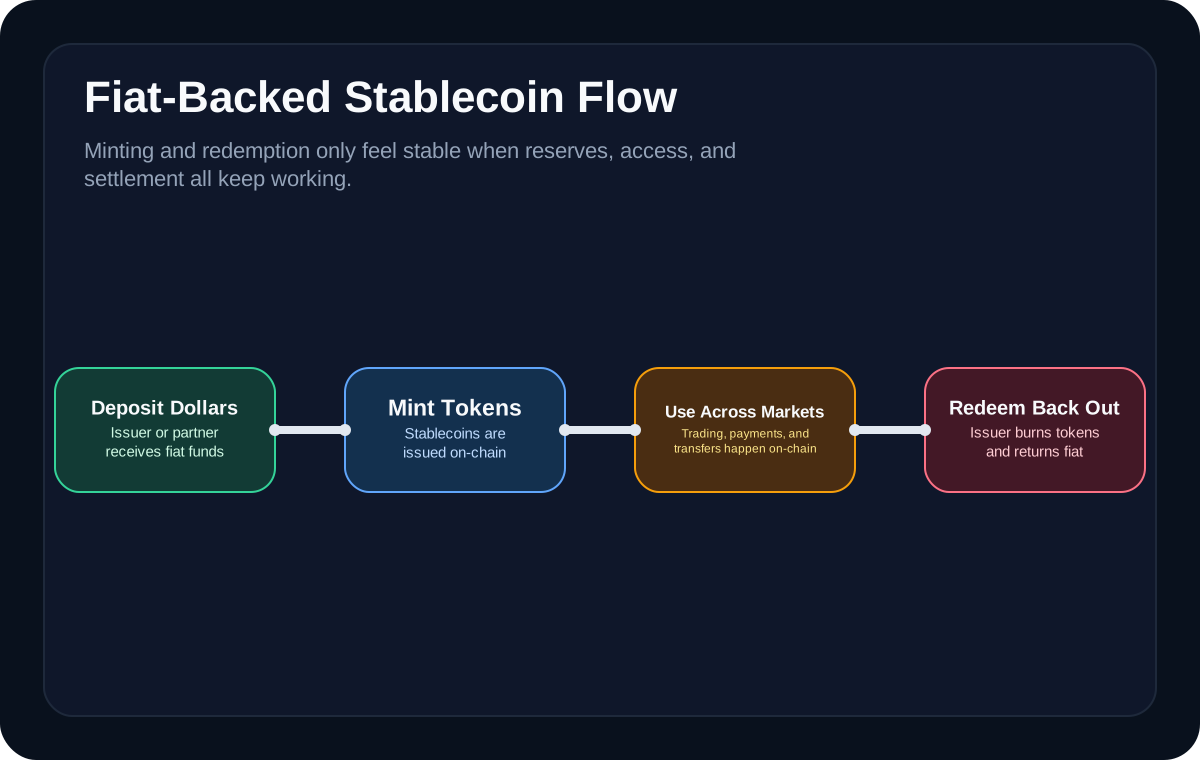
Fiat-backed stablecoins usually start with an issuer receiving dollars or dollar-like assets and then minting tokens against those reserves. The key promise is that the issuer has enough backing to honor redemptions. In simple terms: the token is only as strong as the reserve system and the issuer controlling it.
**Fiat-Backed Stablecoins** becomes easier to understand when you translate it into a user flow instead of a definition. In practice, learners usually meet this idea while *using USDC or USDT as a quote asset on an exchange*, then discover that the visible app action sits on top of wallet permissions, network rules, liquidity, or settlement assumptions that are easy to miss the first time. That is why the safest beginner habit is to ask how the action works, what the hidden dependency is, and what part of the system would fail first under stress.
A common beginner mistake here is *assuming every one-dollar token has the same reserve quality*. Another is *ignoring freeze controls, redemption access, or oracle design*. Those errors usually do not come from bad intent; they come from skipping one layer of understanding and moving straight to the transaction. What can go wrong depends on the lesson, but the pattern is consistent: users either trust the wrong tool, underestimate timing and fees, or assume one network's rules apply everywhere. Slowing down long enough to verify the route, asset, counterparty, or contract address prevents a surprising share of early losses.
A useful way to test whether this idea is landing is to picture where it shows up in a real workflow. Someone might run into it while *using USDC or USDT as a quote asset on an exchange* or *borrowing against crypto collateral to mint a stablecoin-like position*, which is why the topic matters most once money, permissions, or liquidity are already in motion instead of while reading definitions in the abstract.
**Why this matters:** Fiat-Backed Stablecoins is more useful when you can connect it to What Are Stablecoins?, Stablecoins, and Crypto Security. That broader map helps beginners judge when the tool fits, when a simpler path is safer, and which follow-on topic to study next before committing real money or signing real transactions.
For primary-source context, see [Circle USDC overview](https://www.circle.com/usdc), [USDC terms and reserves framing](https://www.circle.com/legal/usdc-terms), and [Ethereum stablecoins guide](https://ethereum.org/en/stablecoins/).
Why redemption is the core mechanism
A fiat-backed peg usually stays tight when approved users can redeem tokens back into dollars at or near one-to-one. That redemption path gives arbitrageurs a reason to buy under-peg tokens and close price gaps. Why this matters: the peg is not defended by hope, but by an exit route that the market believes will work.
The real value of **why redemption is the core mechanism** is that it explains what is happening behind the button a beginner clicks. Whether someone is *borrowing against crypto collateral to mint a stablecoin-like position* or *sending dollar-like value between wallets for global settlement or payroll*, the outcome depends on a chain of infrastructure choices such as custody, routing, execution, and final settlement. Once that chain is clear, the topic stops feeling like crypto magic and starts feeling like a system with understandable moving parts.
Most people do not get hurt by the concept itself. They get hurt by the shortcuts they take around it. *Ignoring freeze controls, redemption access, or oracle design* can turn a simple workflow into an expensive mistake, and *judging safety from branding instead of peg-defense mechanics* often becomes visible only after funds are already in motion. That is why good crypto education pairs the mechanics with practical failure modes instead of teaching the upside in isolation.
Beginners usually retain this faster when they attach it to a concrete decision rather than a glossary term. In practice, the concept becomes easier to trust and easier to question once you connect it to a workflow like *borrowing against crypto collateral to mint a stablecoin-like position* and ask what could break, slow down, or become expensive at each step.
**Why this matters:** Fiat-Backed Stablecoins is more useful when you can connect it to What Are Stablecoins?, Stablecoins, and Crypto Security. That broader map helps beginners judge when the tool fits, when a simpler path is safer, and which follow-on topic to study next before committing real money or signing real transactions.
Visual Guides
Trust, transparency, and attestations
Users judge fiat-backed stablecoins by reserve reports, banking partners, legal structure, and how clearly the issuer explains what is actually backing the token. Attestations help, but they are not the same as real-time transparency into every moving part. What this means: a stablecoin can look simple while still hiding important trust assumptions.
**Fiat-Backed Stablecoins** becomes easier to understand when you translate it into a user flow instead of a definition. In practice, learners usually meet this idea while *sending dollar-like value between wallets for global settlement or payroll*, then discover that the visible app action sits on top of wallet permissions, network rules, liquidity, or settlement assumptions that are easy to miss the first time. That is why the safest beginner habit is to ask how the action works, what the hidden dependency is, and what part of the system would fail first under stress.
Most people do not get hurt by the concept itself. They get hurt by the shortcuts they take around it. *Judging safety from branding instead of peg-defense mechanics* can turn a simple workflow into an expensive mistake, and *assuming every one-dollar token has the same reserve quality* often becomes visible only after funds are already in motion. That is why good crypto education pairs the mechanics with practical failure modes instead of teaching the upside in isolation.
A useful way to test whether this idea is landing is to picture where it shows up in a real workflow. Someone might run into it while *sending dollar-like value between wallets for global settlement or payroll* or *using USDC or USDT as a quote asset on an exchange*, which is why the topic matters most once money, permissions, or liquidity are already in motion instead of while reading definitions in the abstract.
**Why this matters:** Fiat-Backed Stablecoins is more useful when you can connect it to What Are Stablecoins?, Stablecoins, and Crypto Security. That broader map helps beginners judge when the tool fits, when a simpler path is safer, and which follow-on topic to study next before committing real money or signing real transactions.
Issuer controls and freeze risk
Many fiat-backed stablecoins include admin controls that let issuers freeze addresses, blacklist wallets, or comply with legal orders. Those tools can make the product easier to integrate with traditional finance, but they also reduce censorship resistance. Why this matters: convenience and institutional compatibility often come with more centralized control.
The real value of **issuer controls and freeze risk** is that it explains what is happening behind the button a beginner clicks. Whether someone is *using USDC or USDT as a quote asset on an exchange* or *borrowing against crypto collateral to mint a stablecoin-like position*, the outcome depends on a chain of infrastructure choices such as custody, routing, execution, and final settlement. Once that chain is clear, the topic stops feeling like crypto magic and starts feeling like a system with understandable moving parts.
A common beginner mistake here is *assuming every one-dollar token has the same reserve quality*. Another is *ignoring freeze controls, redemption access, or oracle design*. Those errors usually do not come from bad intent; they come from skipping one layer of understanding and moving straight to the transaction. What can go wrong depends on the lesson, but the pattern is consistent: users either trust the wrong tool, underestimate timing and fees, or assume one network's rules apply everywhere. Slowing down long enough to verify the route, asset, counterparty, or contract address prevents a surprising share of early losses.
Beginners usually retain this faster when they attach it to a concrete decision rather than a glossary term. In practice, the concept becomes easier to trust and easier to question once you connect it to a workflow like *using USDC or USDT as a quote asset on an exchange* and ask what could break, slow down, or become expensive at each step.
**Why this matters:** Fiat-Backed Stablecoins is more useful when you can connect it to What Are Stablecoins?, Stablecoins, and Crypto Security. That broader map helps beginners judge when the tool fits, when a simpler path is safer, and which follow-on topic to study next before committing real money or signing real transactions.
When fiat-backed stablecoins fit best
Fiat-backed designs often fit best for high-liquidity trading pairs, simple dollar transfers, treasury parking, and institutions that need a clearer off-chain reserve story. They are usually easiest to explain, but they are not trustless products. In simple terms: they are often the cleanest stable rail, but also the most issuer-dependent one.
**Fiat-Backed Stablecoins** becomes easier to understand when you translate it into a user flow instead of a definition. In practice, learners usually meet this idea while *borrowing against crypto collateral to mint a stablecoin-like position*, then discover that the visible app action sits on top of wallet permissions, network rules, liquidity, or settlement assumptions that are easy to miss the first time. That is why the safest beginner habit is to ask how the action works, what the hidden dependency is, and what part of the system would fail first under stress.
Most people do not get hurt by the concept itself. They get hurt by the shortcuts they take around it. *Ignoring freeze controls, redemption access, or oracle design* can turn a simple workflow into an expensive mistake, and *judging safety from branding instead of peg-defense mechanics* often becomes visible only after funds are already in motion. That is why good crypto education pairs the mechanics with practical failure modes instead of teaching the upside in isolation.
A useful way to test whether this idea is landing is to picture where it shows up in a real workflow. Someone might run into it while *borrowing against crypto collateral to mint a stablecoin-like position* or *sending dollar-like value between wallets for global settlement or payroll*, which is why the topic matters most once money, permissions, or liquidity are already in motion instead of while reading definitions in the abstract.
**Why this matters:** Fiat-Backed Stablecoins is more useful when you can connect it to What Are Stablecoins?, Stablecoins, and Crypto Security. That broader map helps beginners judge when the tool fits, when a simpler path is safer, and which follow-on topic to study next before committing real money or signing real transactions.
Glossary
- Attestation
- A report intended to show whether reserves exist in line with a stablecoin issuer’s claims.
- Issuer
- The company or entity responsible for minting and managing a stablecoin.
- Blacklist
- A control list that can block specific addresses from using a token.
- Treasury bill
- A short-term government debt instrument often used as a reserve asset.
FAQ
What backs a fiat-backed stablecoin?
Usually cash, Treasury bills, or other short-duration dollar-like reserves held by an issuer or custodial structure. The important question is not just what the reserves are, but how redemption access and legal claims are structured.
Why does redemption matter more than branding?
Because the peg holds best when the market believes tokens can reliably be turned back into dollars. If redemption confidence weakens, branding alone cannot keep the price stable.
Are reserve attestations enough?
They help, but they are only one piece of the trust picture. Learners should also look at legal structure, issuer control, banking exposure, and how the stablecoin has behaved under stress.
Can fiat-backed stablecoins freeze funds?
Some can. Admin controls are common in issuer-managed stablecoins and can include freezing or blacklisting addresses when required by policy or law.
Why are fiat-backed stablecoins so common in trading?
Because they tend to have deeper liquidity, tighter pegs, and simpler mental models than more experimental designs. That makes them easier to use as base pairs and settlement assets.