Staking & Yield
Staking Rewards & Risks
Staking rewards can look attractive, but they are variable and come with tradeoffs. Yield depends on network rules, validator performance, fees, and token price, so a high reward rate does not automatically mean a better outcome. It helps readers connect rewards are not free money and slashing and validator risk while keeping the core tradeoffs and risks in view. Some networks apply slashing or other penalties when validators break important rules or suffer major failures.
TL;DR
Learn where staking rewards come from, why they change, and which risks can outweigh the headline yield. It clarifies rewards are not free money, slashing and validator risk, and liquidity and market risk so the lesson fits into the bigger staking & yield picture.
Rewards are not free money
Staking rewards are payment for helping secure a network, not a guaranteed gain. You can earn more tokens and still end up worse off if the token price falls, inflation is high, or fees eat into the payout. Why this matters: headline yield means very little without context.
**Staking Rewards & Risks** becomes easier to understand when you translate it into a user flow instead of a definition. In practice, learners usually meet this idea while *delegating SOL to a validator*, then discover that the visible app action sits on top of wallet permissions, network rules, liquidity, or settlement assumptions that are easy to miss the first time. That is why the safest beginner habit is to ask how the action works, what the hidden dependency is, and what part of the system would fail first under stress.
A common beginner mistake here is *treating staking APR like a savings account rate*. Another is *ignoring validator quality, lockups, and withdrawal timing*. Those errors usually do not come from bad intent; they come from skipping one layer of understanding and moving straight to the transaction. What can go wrong depends on the lesson, but the pattern is consistent: users either trust the wrong tool, underestimate timing and fees, or assume one network's rules apply everywhere. Slowing down long enough to verify the route, asset, counterparty, or contract address prevents a surprising share of early losses.
A useful way to test whether this idea is landing is to picture where it shows up in a real workflow. Someone might run into it while *delegating SOL to a validator* or *following Ethereum staking queues and validator performance*, which is why the topic matters most once money, permissions, or liquidity are already in motion instead of while reading definitions in the abstract.
**Why this matters:** Staking Rewards & Risks is more useful when you can connect it to What Is Staking, How Staking Works, and Liquid Staking & The Ecosystem Around It. That broader map helps beginners judge when the tool fits, when a simpler path is safer, and which follow-on topic to study next before committing real money or signing real transactions.
For primary-source context, see [Solana staking guide](https://solana.com/learn/what-is-staking), [Ethereum security report](https://ethereum.org/reports/trillion-dollar-security.pdf), and [Investor.gov bear market glossary](https://www.investor.gov/index.php/introduction-investing/investing-basics/glossary/bear-market).
Slashing and validator risk
Some networks apply slashing or other penalties when validators break important rules or suffer major failures. If your validator goes offline or behaves incorrectly, rewards can fall and part of the staked amount can sometimes be lost. In simple terms: a bad validator can turn staking into a costly mistake.
The real value of **slashing and validator risk** is that it explains what is happening behind the button a beginner clicks. Whether someone is *following Ethereum staking queues and validator performance* or *comparing direct staking with liquid staking in ecosystems such as Lido or Cosmos*, the outcome depends on a chain of infrastructure choices such as custody, routing, execution, and final settlement. Once that chain is clear, the topic stops feeling like crypto magic and starts feeling like a system with understandable moving parts.
Most people do not get hurt by the concept itself. They get hurt by the shortcuts they take around it. *Ignoring validator quality, lockups, and withdrawal timing* can turn a simple workflow into an expensive mistake, and *adding smart-contract risk before understanding basic delegation first* often becomes visible only after funds are already in motion. That is why good crypto education pairs the mechanics with practical failure modes instead of teaching the upside in isolation.
Beginners usually retain this faster when they attach it to a concrete decision rather than a glossary term. In practice, the concept becomes easier to trust and easier to question once you connect it to a workflow like *following Ethereum staking queues and validator performance* and ask what could break, slow down, or become expensive at each step.
**Why this matters:** Staking Rewards & Risks is more useful when you can connect it to What Is Staking, How Staking Works, and Liquid Staking & The Ecosystem Around It. That broader map helps beginners judge when the tool fits, when a simpler path is safer, and which follow-on topic to study next before committing real money or signing real transactions.
Visual Guides
Liquidity and market risk
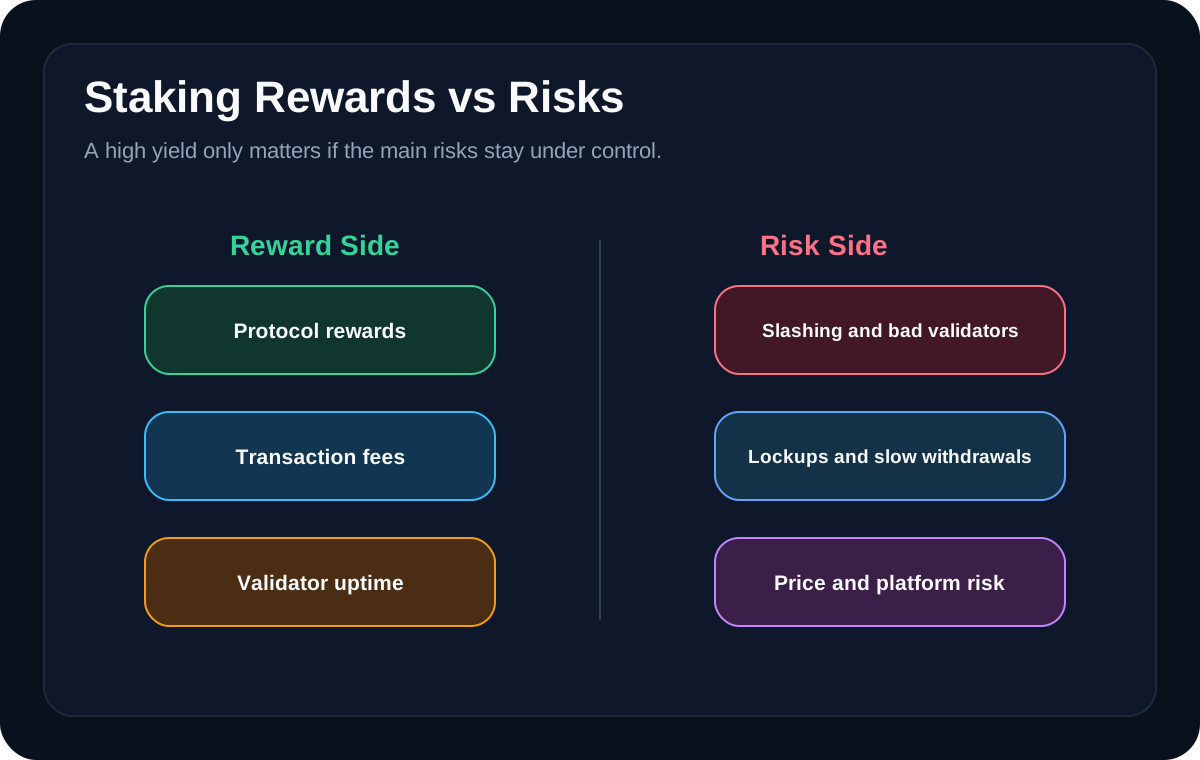
Liquidity risk appears when staked assets are locked and cannot be sold or moved quickly, while market risk shows up when the token price drops. You may earn rewards and still lose money overall if the asset falls fast enough. What this means: yield does not protect you from volatility or slow withdrawals.
**Staking Rewards & Risks** becomes easier to understand when you translate it into a user flow instead of a definition. In practice, learners usually meet this idea while *comparing direct staking with liquid staking in ecosystems such as Lido or Cosmos*, then discover that the visible app action sits on top of wallet permissions, network rules, liquidity, or settlement assumptions that are easy to miss the first time. That is why the safest beginner habit is to ask how the action works, what the hidden dependency is, and what part of the system would fail first under stress.
Most people do not get hurt by the concept itself. They get hurt by the shortcuts they take around it. *Adding smart-contract risk before understanding basic delegation first* can turn a simple workflow into an expensive mistake, and *treating staking APR like a savings account rate* often becomes visible only after funds are already in motion. That is why good crypto education pairs the mechanics with practical failure modes instead of teaching the upside in isolation.
A useful way to test whether this idea is landing is to picture where it shows up in a real workflow. Someone might run into it while *comparing direct staking with liquid staking in ecosystems such as Lido or Cosmos* or *delegating SOL to a validator*, which is why the topic matters most once money, permissions, or liquidity are already in motion instead of while reading definitions in the abstract.
**Why this matters:** Staking Rewards & Risks is more useful when you can connect it to What Is Staking, How Staking Works, and Liquid Staking & The Ecosystem Around It. That broader map helps beginners judge when the tool fits, when a simpler path is safer, and which follow-on topic to study next before committing real money or signing real transactions.
Custody and platform risk
Users who stake through an exchange or service also take on platform and custody risk. Convenience can help beginners, but it is still crucial to know who controls the keys, how withdrawals work, and what happens if the provider has problems. Why this matters: easy onboarding often hides extra dependency risk.
The real value of **custody and platform risk** is that it explains what is happening behind the button a beginner clicks. Whether someone is *delegating SOL to a validator* or *following Ethereum staking queues and validator performance*, the outcome depends on a chain of infrastructure choices such as custody, routing, execution, and final settlement. Once that chain is clear, the topic stops feeling like crypto magic and starts feeling like a system with understandable moving parts.
A common beginner mistake here is *treating staking APR like a savings account rate*. Another is *ignoring validator quality, lockups, and withdrawal timing*. Those errors usually do not come from bad intent; they come from skipping one layer of understanding and moving straight to the transaction. What can go wrong depends on the lesson, but the pattern is consistent: users either trust the wrong tool, underestimate timing and fees, or assume one network's rules apply everywhere. Slowing down long enough to verify the route, asset, counterparty, or contract address prevents a surprising share of early losses.
Beginners usually retain this faster when they attach it to a concrete decision rather than a glossary term. In practice, the concept becomes easier to trust and easier to question once you connect it to a workflow like *delegating SOL to a validator* and ask what could break, slow down, or become expensive at each step.
**Why this matters:** Staking Rewards & Risks is more useful when you can connect it to What Is Staking, How Staking Works, and Liquid Staking & The Ecosystem Around It. That broader map helps beginners judge when the tool fits, when a simpler path is safer, and which follow-on topic to study next before committing real money or signing real transactions.
How to read reward rates correctly
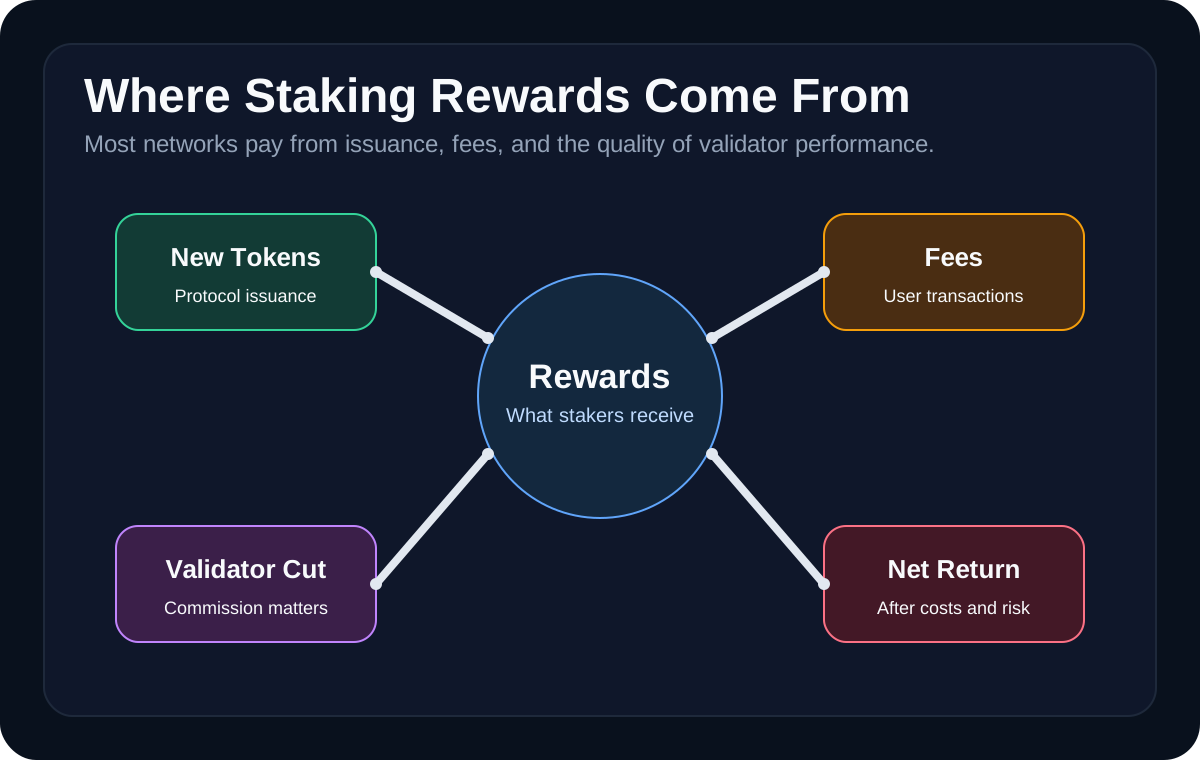
A quoted APY or APR is only one piece of the picture. The real question is what you keep after validator commission, token inflation, market moves, and any lockup cost. Next, it helps to see how those risks compare against the upside. In simple terms: net outcome matters more than advertised yield.
**Staking Rewards & Risks** becomes easier to understand when you translate it into a user flow instead of a definition. In practice, learners usually meet this idea while *following Ethereum staking queues and validator performance*, then discover that the visible app action sits on top of wallet permissions, network rules, liquidity, or settlement assumptions that are easy to miss the first time. That is why the safest beginner habit is to ask how the action works, what the hidden dependency is, and what part of the system would fail first under stress.
Most people do not get hurt by the concept itself. They get hurt by the shortcuts they take around it. *Ignoring validator quality, lockups, and withdrawal timing* can turn a simple workflow into an expensive mistake, and *adding smart-contract risk before understanding basic delegation first* often becomes visible only after funds are already in motion. That is why good crypto education pairs the mechanics with practical failure modes instead of teaching the upside in isolation.
A useful way to test whether this idea is landing is to picture where it shows up in a real workflow. Someone might run into it while *following Ethereum staking queues and validator performance* or *comparing direct staking with liquid staking in ecosystems such as Lido or Cosmos*, which is why the topic matters most once money, permissions, or liquidity are already in motion instead of while reading definitions in the abstract.
**Why this matters:** Staking Rewards & Risks is more useful when you can connect it to What Is Staking, How Staking Works, and Liquid Staking & The Ecosystem Around It. That broader map helps beginners judge when the tool fits, when a simpler path is safer, and which follow-on topic to study next before committing real money or signing real transactions.
Visual Guides
When high yield is a warning sign
A very high staking yield can be a sign of higher inflation, weaker token economics, or extra protocol risk rather than a better opportunity. Beginners often see the biggest number and assume it is the best option, even when the underlying asset or setup is much riskier. Why this matters: high APY should trigger more questions, not less.
The real value of **when high yield is a warning sign** is that it explains what is happening behind the button a beginner clicks. Whether someone is *comparing direct staking with liquid staking in ecosystems such as Lido or Cosmos* or *delegating SOL to a validator*, the outcome depends on a chain of infrastructure choices such as custody, routing, execution, and final settlement. Once that chain is clear, the topic stops feeling like crypto magic and starts feeling like a system with understandable moving parts.
Most people do not get hurt by the concept itself. They get hurt by the shortcuts they take around it. *Adding smart-contract risk before understanding basic delegation first* can turn a simple workflow into an expensive mistake, and *treating staking APR like a savings account rate* often becomes visible only after funds are already in motion. That is why good crypto education pairs the mechanics with practical failure modes instead of teaching the upside in isolation.
Beginners usually retain this faster when they attach it to a concrete decision rather than a glossary term. In practice, the concept becomes easier to trust and easier to question once you connect it to a workflow like *comparing direct staking with liquid staking in ecosystems such as Lido or Cosmos* and ask what could break, slow down, or become expensive at each step.
**Why this matters:** Staking Rewards & Risks is more useful when you can connect it to What Is Staking, How Staking Works, and Liquid Staking & The Ecosystem Around It. That broader map helps beginners judge when the tool fits, when a simpler path is safer, and which follow-on topic to study next before committing real money or signing real transactions.
- Check whether rewards come from sustainable network activity or just token issuance.
- Compare validator fees and token inflation before trusting a headline number.
- Assume extra complexity or extra volatility may be hiding behind unusually high yield.
How beginners should balance risk and reward
Most beginners do better with a clear, lower-complexity staking setup than with an aggressive yield strategy. A smaller reward from a simpler path can be more useful than a larger reward that depends on smart contracts, weak validators, or illiquid positions. In simple terms: the best reward is the one you can still keep after the risks are counted.
**Staking Rewards & Risks** becomes easier to understand when you translate it into a user flow instead of a definition. In practice, learners usually meet this idea while *delegating SOL to a validator*, then discover that the visible app action sits on top of wallet permissions, network rules, liquidity, or settlement assumptions that are easy to miss the first time. That is why the safest beginner habit is to ask how the action works, what the hidden dependency is, and what part of the system would fail first under stress.
A common beginner mistake here is *treating staking APR like a savings account rate*. Another is *ignoring validator quality, lockups, and withdrawal timing*. Those errors usually do not come from bad intent; they come from skipping one layer of understanding and moving straight to the transaction. What can go wrong depends on the lesson, but the pattern is consistent: users either trust the wrong tool, underestimate timing and fees, or assume one network's rules apply everywhere. Slowing down long enough to verify the route, asset, counterparty, or contract address prevents a surprising share of early losses.
A useful way to test whether this idea is landing is to picture where it shows up in a real workflow. Someone might run into it while *delegating SOL to a validator* or *following Ethereum staking queues and validator performance*, which is why the topic matters most once money, permissions, or liquidity are already in motion instead of while reading definitions in the abstract.
**Why this matters:** Staking Rewards & Risks is more useful when you can connect it to What Is Staking, How Staking Works, and Liquid Staking & The Ecosystem Around It. That broader map helps beginners judge when the tool fits, when a simpler path is safer, and which follow-on topic to study next before committing real money or signing real transactions.
Glossary
- Rewards are not free money
- Staking rewards are payment for helping secure a network, not a guaranteed gain. You can earn more tokens and still end up worse off if the token price falls, inflation is high, or fees eat into the payout.
- Slashing and validator risk
- Some networks apply slashing or other penalties when validators break important rules or suffer major failures. If your validator goes offline or behaves incorrectly, rewards can fall and part of the staked amount can sometimes be lost.
- Liquidity and market risk
- Liquidity risk appears when staked assets are locked and cannot be sold or moved quickly, while market risk shows up when the token price drops. You may earn rewards and still lose money overall if the asset falls fast enough.
- Custody and platform risk
- Users who stake through an exchange or service also take on platform and custody risk. Convenience can help beginners, but it is still crucial to know who controls the keys, how withdrawals work, and what happens if the provider has problems.
FAQ
Why can staking rewards change over time?
Reward rates change because network participation changes, validators charge different fees, and some chains adjust issuance. A rate you see today may look different a few weeks later.
Can you lose money even if you earn staking rewards?
Yes. A token can fall in price faster than rewards accumulate, and fees or slashing can reduce net returns even more.
Is higher APY always better?
No. A very high APY can come with weaker validator quality, higher inflation, more platform risk, or more volatile assets.
What is the biggest staking risk for beginners?
It depends on the setup, but validator quality, token-price drops, and lockup rules are the most common beginner mistakes. Many users focus on yield and ignore those three factors.
Does liquid staking remove risk?
No. Liquid staking can improve flexibility, but it adds smart contract and peg risk on top of the normal staking risks.
How should beginners compare staking opportunities?
Compare net reward rate, fees, validator quality, lockups, and custody setup together. A simpler, lower-yield option can be safer than a more complex high-APY product.