Crypto Fundamentals
Buying Your First Crypto
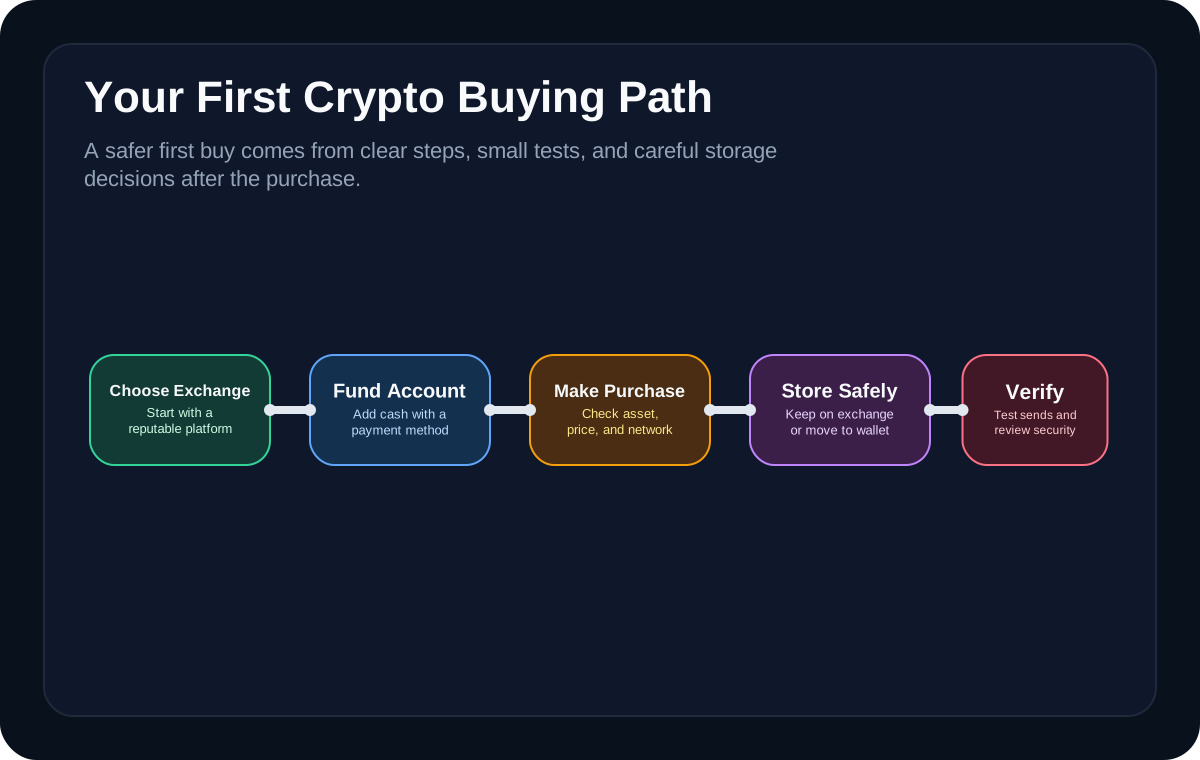
Buying your first crypto usually means choosing a reputable exchange, funding your account, selecting the asset and network carefully, and then deciding whether to keep it on the platform or move it to a wallet you control. It helps readers connect exchanges explained and centralized vs decentralized exchanges while keeping the core tradeoffs and risks in view. Some exchanges focus on simplicity, while others offer advanced trading, deeper liquidity, and access to more assets.
TL;DR
Walk through exchanges, funding methods, order types, and the simple checks that make a first crypto purchase safer. It clarifies exchanges explained, centralized vs decentralized exchanges, and funding methods and order basics so the lesson fits into the bigger crypto fundamentals picture.
Exchanges explained
Exchanges are the on-ramp most beginners use to turn local currency into crypto. Some exchanges focus on simplicity, while others offer advanced trading, deeper liquidity, and access to more assets. In simple terms: exchanges are where most people first meet the crypto market.
**Buying Your First Crypto** becomes easier to understand when you translate it into a user flow instead of a definition. In practice, learners usually meet this idea while *sending BTC from one self-custody wallet to another*, then discover that the visible app action sits on top of wallet permissions, network rules, liquidity, or settlement assumptions that are easy to miss the first time. That is why the safest beginner habit is to ask how the action works, what the hidden dependency is, and what part of the system would fail first under stress.
A common beginner mistake here is *confusing the wallet interface with the blockchain underneath it*. Another is *sending assets on the wrong network*. Those errors usually do not come from bad intent; they come from skipping one layer of understanding and moving straight to the transaction. What can go wrong depends on the lesson, but the pattern is consistent: users either trust the wrong tool, underestimate timing and fees, or assume one network's rules apply everywhere. Slowing down long enough to verify the route, asset, counterparty, or contract address prevents a surprising share of early losses.
A useful way to test whether this idea is landing is to picture where it shows up in a real workflow. Someone might run into it while *sending BTC from one self-custody wallet to another* or *using ETH to pay for a smart-contract action on Ethereum*, which is why the topic matters most once money, permissions, or liquidity are already in motion instead of while reading definitions in the abstract.
**Why this matters:** Buying Your First Crypto is more useful when you can connect it to Crypto Wallets, What Is Cryptocurrency, and Crypto Trading Basics. That broader map helps beginners judge when the tool fits, when a simpler path is safer, and which follow-on topic to study next before committing real money or signing real transactions.
For primary-source context, see [Ethereum wallets guide](https://ethereum.org/en/wallets), [Ethereum stablecoins guide](https://ethereum.org/en/stablecoins/), and [Ethereum DeFi guide](https://ethereum.org/pcm/defi/).
Centralized vs decentralized exchanges
Centralized exchanges manage accounts, custody, and order books for users, which makes onboarding easier for a first purchase. Decentralized exchanges let users trade directly from a wallet through smart contracts, which adds control but also adds responsibility and complexity. Why this matters: most beginners start centralized and then learn wallet-based trading later.
The real value of **centralized vs decentralized exchanges** is that it explains what is happening behind the button a beginner clicks. Whether someone is *using ETH to pay for a smart-contract action on Ethereum* or *holding stablecoins in a wallet before moving into an exchange or DeFi app*, the outcome depends on a chain of infrastructure choices such as custody, routing, execution, and final settlement. Once that chain is clear, the topic stops feeling like crypto magic and starts feeling like a system with understandable moving parts.
Most people do not get hurt by the concept itself. They get hurt by the shortcuts they take around it. *Sending assets on the wrong network* can turn a simple workflow into an expensive mistake, and *chasing price action before understanding custody, gas fees, and confirmations* often becomes visible only after funds are already in motion. That is why good crypto education pairs the mechanics with practical failure modes instead of teaching the upside in isolation.
Beginners usually retain this faster when they attach it to a concrete decision rather than a glossary term. In practice, the concept becomes easier to trust and easier to question once you connect it to a workflow like *using ETH to pay for a smart-contract action on Ethereum* and ask what could break, slow down, or become expensive at each step.
**Why this matters:** Buying Your First Crypto is more useful when you can connect it to Crypto Wallets, What Is Cryptocurrency, and Crypto Trading Basics. That broader map helps beginners judge when the tool fits, when a simpler path is safer, and which follow-on topic to study next before committing real money or signing real transactions.
Funding methods and order basics
Once the account is set up, users typically fund it with a bank transfer, card purchase, or local payment option. The first trade is often either a simple market buy or a basic limit order depending on how much control over price the user wants. What this means: a first purchase is usually straightforward, but the details still matter.
**Buying Your First Crypto** becomes easier to understand when you translate it into a user flow instead of a definition. In practice, learners usually meet this idea while *holding stablecoins in a wallet before moving into an exchange or DeFi app*, then discover that the visible app action sits on top of wallet permissions, network rules, liquidity, or settlement assumptions that are easy to miss the first time. That is why the safest beginner habit is to ask how the action works, what the hidden dependency is, and what part of the system would fail first under stress.
Most people do not get hurt by the concept itself. They get hurt by the shortcuts they take around it. *Chasing price action before understanding custody, gas fees, and confirmations* can turn a simple workflow into an expensive mistake, and *confusing the wallet interface with the blockchain underneath it* often becomes visible only after funds are already in motion. That is why good crypto education pairs the mechanics with practical failure modes instead of teaching the upside in isolation.
A useful way to test whether this idea is landing is to picture where it shows up in a real workflow. Someone might run into it while *holding stablecoins in a wallet before moving into an exchange or DeFi app* or *sending BTC from one self-custody wallet to another*, which is why the topic matters most once money, permissions, or liquidity are already in motion instead of while reading definitions in the abstract.
**Why this matters:** Buying Your First Crypto is more useful when you can connect it to Crypto Wallets, What Is Cryptocurrency, and Crypto Trading Basics. That broader map helps beginners judge when the tool fits, when a simpler path is safer, and which follow-on topic to study next before committing real money or signing real transactions.
How to safely buy crypto
Safety starts before the buy button. Choose a reputable platform, enable security features, verify the asset ticker and network, and begin with a small amount if you have never moved crypto before. In simple terms: the safest first buy is the one you fully understand before you make it.
The real value of **how to safely buy crypto** is that it explains what is happening behind the button a beginner clicks. Whether someone is *sending BTC from one self-custody wallet to another* or *using ETH to pay for a smart-contract action on Ethereum*, the outcome depends on a chain of infrastructure choices such as custody, routing, execution, and final settlement. Once that chain is clear, the topic stops feeling like crypto magic and starts feeling like a system with understandable moving parts.
A common beginner mistake here is *confusing the wallet interface with the blockchain underneath it*. Another is *sending assets on the wrong network*. Those errors usually do not come from bad intent; they come from skipping one layer of understanding and moving straight to the transaction. What can go wrong depends on the lesson, but the pattern is consistent: users either trust the wrong tool, underestimate timing and fees, or assume one network's rules apply everywhere. Slowing down long enough to verify the route, asset, counterparty, or contract address prevents a surprising share of early losses.
Beginners usually retain this faster when they attach it to a concrete decision rather than a glossary term. In practice, the concept becomes easier to trust and easier to question once you connect it to a workflow like *sending BTC from one self-custody wallet to another* and ask what could break, slow down, or become expensive at each step.
**Why this matters:** Buying Your First Crypto is more useful when you can connect it to Crypto Wallets, What Is Cryptocurrency, and Crypto Trading Basics. That broader map helps beginners judge when the tool fits, when a simpler path is safer, and which follow-on topic to study next before committing real money or signing real transactions.
- Choose a reputable exchange with clear security and withdrawal tools.
- Complete the account setup and enable two-factor authentication.
- Fund the account with a method you understand and can verify.
- Double-check the asset, ticker, and network before buying.
- Decide whether to keep the crypto on the exchange or move it to a wallet.
Visual Guides
What happens after you buy
After the purchase, the next decision is custody. Some users leave small balances on the exchange for convenience, while others move assets into a self-custody wallet so they control the keys directly. Why this matters: buying crypto is only the first step, and storage decisions shape your risk after that.
**Buying Your First Crypto** becomes easier to understand when you translate it into a user flow instead of a definition. In practice, learners usually meet this idea while *using ETH to pay for a smart-contract action on Ethereum*, then discover that the visible app action sits on top of wallet permissions, network rules, liquidity, or settlement assumptions that are easy to miss the first time. That is why the safest beginner habit is to ask how the action works, what the hidden dependency is, and what part of the system would fail first under stress.
Most people do not get hurt by the concept itself. They get hurt by the shortcuts they take around it. *Sending assets on the wrong network* can turn a simple workflow into an expensive mistake, and *chasing price action before understanding custody, gas fees, and confirmations* often becomes visible only after funds are already in motion. That is why good crypto education pairs the mechanics with practical failure modes instead of teaching the upside in isolation.
A useful way to test whether this idea is landing is to picture where it shows up in a real workflow. Someone might run into it while *using ETH to pay for a smart-contract action on Ethereum* or *holding stablecoins in a wallet before moving into an exchange or DeFi app*, which is why the topic matters most once money, permissions, or liquidity are already in motion instead of while reading definitions in the abstract.
**Why this matters:** Buying Your First Crypto is more useful when you can connect it to Crypto Wallets, What Is Cryptocurrency, and Crypto Trading Basics. That broader map helps beginners judge when the tool fits, when a simpler path is safer, and which follow-on topic to study next before committing real money or signing real transactions.
Avoiding common beginner mistakes
Most first-buy mistakes are simple but expensive. What this means: slow, verified actions beat fast, confident clicks every time.
The real value of **avoiding common beginner mistakes** is that it explains what is happening behind the button a beginner clicks. Whether someone is *holding stablecoins in a wallet before moving into an exchange or DeFi app* or *sending BTC from one self-custody wallet to another*, the outcome depends on a chain of infrastructure choices such as custody, routing, execution, and final settlement. Once that chain is clear, the topic stops feeling like crypto magic and starts feeling like a system with understandable moving parts.
Most people do not get hurt by the concept itself. They get hurt by the shortcuts they take around it. *Chasing price action before understanding custody, gas fees, and confirmations* can turn a simple workflow into an expensive mistake, and *confusing the wallet interface with the blockchain underneath it* often becomes visible only after funds are already in motion. That is why good crypto education pairs the mechanics with practical failure modes instead of teaching the upside in isolation.
Beginners usually retain this faster when they attach it to a concrete decision rather than a glossary term. In practice, the concept becomes easier to trust and easier to question once you connect it to a workflow like *holding stablecoins in a wallet before moving into an exchange or DeFi app* and ask what could break, slow down, or become expensive at each step.
**Why this matters:** Buying Your First Crypto is more useful when you can connect it to Crypto Wallets, What Is Cryptocurrency, and Crypto Trading Basics. That broader map helps beginners judge when the tool fits, when a simpler path is safer, and which follow-on topic to study next before committing real money or signing real transactions.
- Buying the wrong asset because the ticker looked similar.
- Sending funds on the wrong network during a withdrawal.
- Leaving large balances on a platform without understanding custody risk.
- Buying based only on hype instead of understanding the asset first.
- Skipping a test transfer before moving a larger amount.
Glossary
- Exchange
- A platform where users buy, sell, and swap cryptocurrencies.
- Market order
- An order that buys or sells immediately at the best available price.
- Limit order
- An order that only executes at a chosen price or better.
- Withdrawal network
- The blockchain network used when sending crypto out of a platform.
FAQ
What is the easiest way for a beginner to buy crypto?
Most beginners start on a reputable centralized exchange because the onboarding and payment methods are familiar. It is usually the simplest place to make a first purchase and then learn from there.
Should I use a market order or a limit order first?
A market order is simpler because it executes immediately at the available price. A limit order gives more price control but adds one more concept to manage.
Do I need a wallet before I buy crypto?
Not always. You can buy on an exchange first, but it is smart to learn wallet basics early so you understand your storage options after the purchase.
What is the biggest first-time buying mistake?
A common one is rushing and sending funds on the wrong network or buying an asset without understanding what it is. Slowing down and verifying each step prevents a lot of problems.
Should I move crypto off the exchange after buying?
That depends on the amount, your confidence with wallets, and how often you need to use the asset. Many people move larger or longer-term holdings into self-custody once they are comfortable doing so.