Wallet Security
Building A Personal Wallet Security Routine
Wallet security works best as a repeatable routine, not a one-time setup. The goal is to build habits that make safe behavior normal before stress, urgency, or confusion show up. It helps readers connect security is a routine, not a purchase and build a transaction check habit while keeping the core tradeoffs and risks in view. Good wallet security does not come from buying one device or memorizing one rule.
TL;DR
Bring the course together with a personal routine for wallet hygiene, transaction checks, recovery planning, and separating daily activity from long-term storage. It clarifies security is a routine, not a purchase, build a transaction check habit, and separate everyday and long-term risk so the lesson fits into the bigger wallet security picture.
Security is a routine, not a purchase
Good wallet security does not come from buying one device or memorizing one rule. It comes from repeating the same careful habits around links, approvals, backups, and storage over time.
**Building A Personal Wallet Security Routine** becomes easier to understand when you translate it into a user flow instead of a definition. In practice, learners usually meet this idea while *writing recovery material offline and checking it twice*, then discover that the visible app action sits on top of wallet permissions, network rules, liquidity, or settlement assumptions that are easy to miss the first time. That is why the safest beginner habit is to ask how the action works, what the hidden dependency is, and what part of the system would fail first under stress.
A common beginner mistake here is *storing recovery phrases in cloud notes or screenshots*. Another is *clicking a wallet link from a fake support message*. Those errors usually do not come from bad intent; they come from skipping one layer of understanding and moving straight to the transaction. What can go wrong depends on the lesson, but the pattern is consistent: users either trust the wrong tool, underestimate timing and fees, or assume one network's rules apply everywhere. Slowing down long enough to verify the route, asset, counterparty, or contract address prevents a surprising share of early losses.
A useful way to test whether this idea is landing is to picture where it shows up in a real workflow. Someone might run into it while *writing recovery material offline and checking it twice* or *reviewing a wallet approval before signing it*, which is why the topic matters most once money, permissions, or liquidity are already in motion instead of while reading definitions in the abstract.
**Why this matters:** Building A Personal Wallet Security Routine is more useful when you can connect it to Crypto Security, Crypto Wallets, and Ethereum & Smart Contracts. That broader map helps beginners judge when the tool fits, when a simpler path is safer, and which follow-on topic to study next before committing real money or signing real transactions.
For primary-source context, see [Ethereum security report](https://ethereum.org/reports/trillion-dollar-security.pdf), [Ethereum wallets guide](https://ethereum.org/en/wallets), and [Ethereum smart contracts docs](https://ethereum.org/developers/docs/smart-contracts/).
Build a transaction check habit
Before approving any send, swap, or signature, pause long enough to confirm the wallet, the site, the network, the address, and the amount. That check feels small, but it prevents a large share of avoidable losses.
The real value of **build a transaction check habit** is that it explains what is happening behind the button a beginner clicks. Whether someone is *reviewing a wallet approval before signing it* or *keeping higher-value storage separate from a daily-use hot wallet*, the outcome depends on a chain of infrastructure choices such as custody, routing, execution, and final settlement. Once that chain is clear, the topic stops feeling like crypto magic and starts feeling like a system with understandable moving parts.
Most people do not get hurt by the concept itself. They get hurt by the shortcuts they take around it. *Clicking a wallet link from a fake support message* can turn a simple workflow into an expensive mistake, and *treating a hardware wallet like a complete substitute for good habits* often becomes visible only after funds are already in motion. That is why good crypto education pairs the mechanics with practical failure modes instead of teaching the upside in isolation.
Beginners usually retain this faster when they attach it to a concrete decision rather than a glossary term. In practice, the concept becomes easier to trust and easier to question once you connect it to a workflow like *reviewing a wallet approval before signing it* and ask what could break, slow down, or become expensive at each step.
**Why this matters:** Building A Personal Wallet Security Routine is more useful when you can connect it to Crypto Security, Crypto Wallets, and Ethereum & Smart Contracts. That broader map helps beginners judge when the tool fits, when a simpler path is safer, and which follow-on topic to study next before committing real money or signing real transactions.
Separate everyday and long-term risk
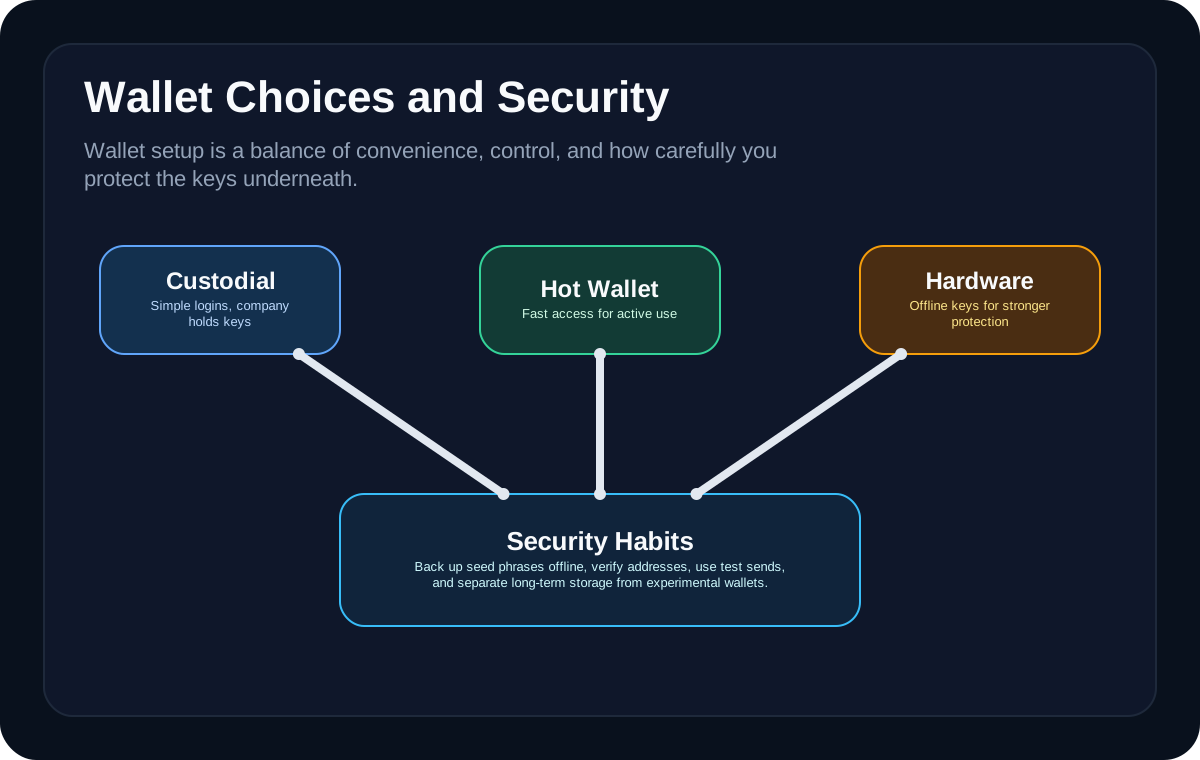
One of the most practical security upgrades is using different wallet setups for different jobs. Routine app interaction does not need to expose the same funds or credentials as long-term storage.
**Building A Personal Wallet Security Routine** becomes easier to understand when you translate it into a user flow instead of a definition. In practice, learners usually meet this idea while *keeping higher-value storage separate from a daily-use hot wallet*, then discover that the visible app action sits on top of wallet permissions, network rules, liquidity, or settlement assumptions that are easy to miss the first time. That is why the safest beginner habit is to ask how the action works, what the hidden dependency is, and what part of the system would fail first under stress.
Most people do not get hurt by the concept itself. They get hurt by the shortcuts they take around it. *Treating a hardware wallet like a complete substitute for good habits* can turn a simple workflow into an expensive mistake, and *storing recovery phrases in cloud notes or screenshots* often becomes visible only after funds are already in motion. That is why good crypto education pairs the mechanics with practical failure modes instead of teaching the upside in isolation.
A useful way to test whether this idea is landing is to picture where it shows up in a real workflow. Someone might run into it while *keeping higher-value storage separate from a daily-use hot wallet* or *writing recovery material offline and checking it twice*, which is why the topic matters most once money, permissions, or liquidity are already in motion instead of while reading definitions in the abstract.
**Why this matters:** Building A Personal Wallet Security Routine is more useful when you can connect it to Crypto Security, Crypto Wallets, and Ethereum & Smart Contracts. That broader map helps beginners judge when the tool fits, when a simpler path is safer, and which follow-on topic to study next before committing real money or signing real transactions.
Review and clean up regularly
Wallet hygiene improves when users revisit old approvals, check device health, confirm backup access, and update their own process instead of assuming the original setup will remain good forever.
The real value of **review and clean up regularly** is that it explains what is happening behind the button a beginner clicks. Whether someone is *writing recovery material offline and checking it twice* or *reviewing a wallet approval before signing it*, the outcome depends on a chain of infrastructure choices such as custody, routing, execution, and final settlement. Once that chain is clear, the topic stops feeling like crypto magic and starts feeling like a system with understandable moving parts.
A common beginner mistake here is *storing recovery phrases in cloud notes or screenshots*. Another is *clicking a wallet link from a fake support message*. Those errors usually do not come from bad intent; they come from skipping one layer of understanding and moving straight to the transaction. What can go wrong depends on the lesson, but the pattern is consistent: users either trust the wrong tool, underestimate timing and fees, or assume one network's rules apply everywhere. Slowing down long enough to verify the route, asset, counterparty, or contract address prevents a surprising share of early losses.
Beginners usually retain this faster when they attach it to a concrete decision rather than a glossary term. In practice, the concept becomes easier to trust and easier to question once you connect it to a workflow like *writing recovery material offline and checking it twice* and ask what could break, slow down, or become expensive at each step.
**Why this matters:** Building A Personal Wallet Security Routine is more useful when you can connect it to Crypto Security, Crypto Wallets, and Ethereum & Smart Contracts. That broader map helps beginners judge when the tool fits, when a simpler path is safer, and which follow-on topic to study next before committing real money or signing real transactions.
A simple weekly security routine
The best security routine is the one you can realistically keep. It should be simple enough to repeat, specific enough to catch problems early, and calm enough that you will still follow it when the market gets noisy.
**Building A Personal Wallet Security Routine** becomes easier to understand when you translate it into a user flow instead of a definition. In practice, learners usually meet this idea while *reviewing a wallet approval before signing it*, then discover that the visible app action sits on top of wallet permissions, network rules, liquidity, or settlement assumptions that are easy to miss the first time. That is why the safest beginner habit is to ask how the action works, what the hidden dependency is, and what part of the system would fail first under stress.
Most people do not get hurt by the concept itself. They get hurt by the shortcuts they take around it. *Clicking a wallet link from a fake support message* can turn a simple workflow into an expensive mistake, and *treating a hardware wallet like a complete substitute for good habits* often becomes visible only after funds are already in motion. That is why good crypto education pairs the mechanics with practical failure modes instead of teaching the upside in isolation.
A useful way to test whether this idea is landing is to picture where it shows up in a real workflow. Someone might run into it while *reviewing a wallet approval before signing it* or *keeping higher-value storage separate from a daily-use hot wallet*, which is why the topic matters most once money, permissions, or liquidity are already in motion instead of while reading definitions in the abstract.
**Why this matters:** Building A Personal Wallet Security Routine is more useful when you can connect it to Crypto Security, Crypto Wallets, and Ethereum & Smart Contracts. That broader map helps beginners judge when the tool fits, when a simpler path is safer, and which follow-on topic to study next before committing real money or signing real transactions.
- Review recent wallet activity and anything you signed.
- Check for unnecessary old approvals and disconnect what you do not use.
- Confirm devices, wallet apps, and backup assumptions still make sense.
- Keep high-value storage separate from routine on-chain experimentation.
- Slow down whenever urgency or pressure tries to override your normal checks.
Visual Guides
Glossary
- Security is a routine, not a purchase
- Good wallet security does not come from buying one device or memorizing one rule. It comes from repeating the same careful habits around links, approvals, backups, and storage over time.
- Build a transaction check habit
- Before approving any send, swap, or signature, pause long enough to confirm the wallet, the site, the network, the address, and the amount. That check feels small, but it prevents a large share of avoidable losses.
- Separate everyday and long-term risk
- One of the most practical security upgrades is using different wallet setups for different jobs. Routine app interaction does not need to expose the same funds or credentials as long-term storage.
- Review and clean up regularly
- Wallet hygiene improves when users revisit old approvals, check device health, confirm backup access, and update their own process instead of assuming the original setup will remain good forever.
FAQ
What is the most useful wallet-security habit?
A deliberate transaction-check habit is one of the most useful because it protects against rushed sends, bad approvals, and phishing errors at the moment they matter most.
Why separate daily-use wallets from long-term storage?
Because it limits the blast radius of mistakes. Everyday app use carries more interaction risk than long-term storage, so separating them reduces exposure.
Should I review approvals regularly?
Yes. Old approvals can remain active longer than users realize, so periodic review is a practical habit for reducing unnecessary risk.
What makes a security routine realistic?
It needs to be simple enough to repeat and specific enough to catch real problems. A routine that is too complicated often gets ignored.
What should I study next after this course?
Crypto security, smart-contract risk, wallet basics, and practical DeFi safety are the best next steps because they build directly on the habits in this course.